
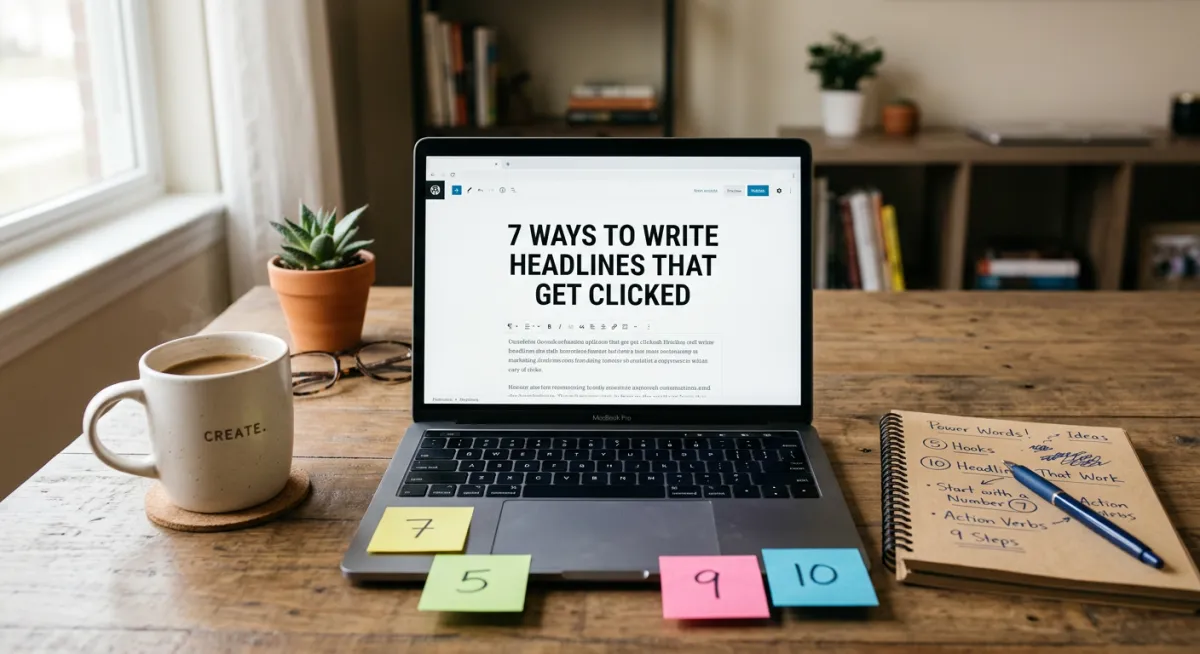
Why Putting a Number in Your Headline Is One of the Smartest Things You Can Do
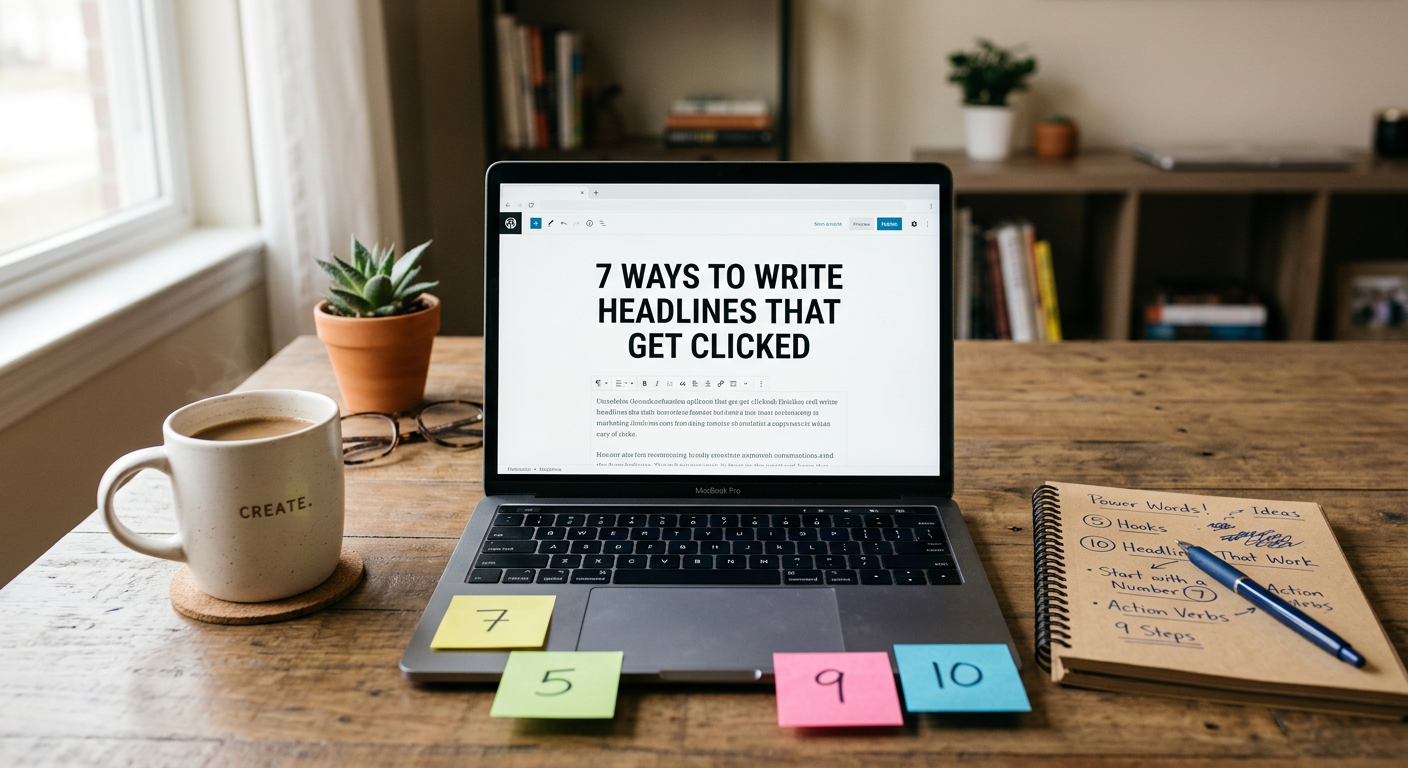
It sounds almost too simple. But the psychology behind it is fascinating, and the evidence is compelling.
Here is a little experiment. Which of these two headlines would you be more likely to click on?
How to Write a Better Blog Post
7 Simple Ways to Write a Blog Post People Will Read
If you chose the second one, you are in good company. And you are also behaving in an entirely predictable way, and backed by decades of research into how we read and make decisions.
The difference between those two headlines is one thing: a number. And that single digit can change the outcome. Let me explain why.
The Anxiety of the Unknown
When we encounter a piece of content online, we make a split-second judgement before committing to read it. The question our brain is silently asking is a very practical one: Is this worth my time?
Vague headlines make that question difficult to answer. “How to Write a Better Blog Post” tells you the topic, but nothing else. You don’t know how long it is, how complex it will be, whether it will cover what you actually need, or when it will end. There is a low-level anxiety attached to the unknown, and that anxiety is enough to make many readers hesitate.
A numbered headline removes that anxiety in an instant.
“7 Simple Ways…” tells you: there are seven things on this list. We will work through them together. You know where you are starting, and you know exactly where you will finish. That sense of structure and predictability is deeply reassuring to the human brain.
Psychologists call this ‘cognitive ease’ – the preference our minds have for information that is clear, ordered, and easy to process. When something is cognitively easy, we are more drawn to it. When it feels complicated or uncertain, we resist it.
A number, it turns out, is one of the fastest ways to signal cognitive ease.
BuzzFeed Did Not Invent This. They Simply Perfected It
If you have spent any time on the Internet in the last fifteen years, you will be familiar with BuzzFeed’s signature format. “21 Things Only 90s Kids Will Remember.” “13 Reasons Your Cat is Judging You.” “34 Foods That Are Making You Tired.”
BuzzFeed has helped build one of the most visited media properties in the world on the back of this format. At its peak, the site was attracting more than 100 million unique visitors a month. They understood something very important about human psychology, and they used it to extraordinary effect.
Cosmopolitan magazine has been using numbered headlines on its covers for decades. “75 Sex Moves Men Crave.” “10 Signs He Is Completely Into You.” “5 Mistakes Every Woman Makes in Her 30s.” The format has sold copies off newsstands for over half a century, and it keeps working, regardless of era or technology.
David Ogilvy, widely considered one of the greatest advertising minds of the twentieth century, was writing numbered headlines in the 1950s. He knew that specificity sells. A number is about as specific as language gets.
Some of Ogilvy’s headlines:
At 60 miles an hour the loudest noise in this new Rolls-Royce comes from the electric clock
Now Puerto Rico Offers 100 Percent Tax Exemption to New Industry
How Women Over 35 Can Look Younger
You Can Tour America for $35 a Week
The Rolls-Royce headline was written in 1958. Ogilvy himself called it “the best headline I ever wrote.” Ogilvy later claimed that Rolls-Royce sales rose 50% while the ad was running.
What Research Shows
In case you need more than anecdote and history, the data backs this up.
Conductor, a content marketing and SEO platform, conducted a landmark study into headline preferences. Conductor and other headline studies have found that numbered headlines consistently outperform many other formats for click-through rates and reader preference.
Analyses of search results and content performance show that list-based articles often rank well and can generate strong organic traffic compared with other formats.
Backlinks, for those less familiar with SEO, are links from other websites pointing to yours. They are one of Google’s most important ranking signals, which means that numbered list posts do not just get read more. They also rank higher in search results, which means more people find them in the first place.
Why Odd Numbers Outperform Even Ones
Here’s a detail that surprises most people. It isn’t just the number that matters – it’s the specific numbers you choose.
Some marketing tests have found that odd numbers tend to generate higher click-through rates than even ones. A headline promising “7 tips” will generally outperform one promising “8 tips”, even when the content is identical.
The leading theory is that odd numbers feel less “manufactured” than even ones. If you have exactly eight tips, it raises a quiet suspicion that you forced your content to fit a round number. Seven or nine feels more like you genuinely found that many insights and stopped there.
Several marketing tests suggest that 7 often performs strongly as a headline number. Separately, psychology research – such as Miller’s famous paper on the “magical number seven” and working memory – has helped cement seven as a particularly familiar and comfortable number in our minds.
There are various theories as to why – some people point to cultural familiarity (seven days of the week, seven deadly sins, seven wonders of the world), others to the idea that around seven items sit comfortably within our working memory capacity. Whatever the reason, if you are ever unsure which number to use, seven is a reliable starting point.
Worth noting: The number 10 is another consistently strong performer despite being even, most likely because it carries the implicit promise of comprehensiveness. A ‘Top 10’ list feels authoritative and complete in a way that other even numbers do not.
It Works Because It Respects the Reader
There is something else going on here beyond the psychology of clicks and shares. Something worth pausing on.
A numbered headline is, at its heart, an act of respect towards the reader. It says: I have done the work of organising this for you. I am not going to make you wade through a sprawling essay hoping to find the bits that matter to you. Here are the things you need, clearly labelled, easy to navigate.
That is precisely why the format has survived across print magazines, early internet blogs, social media feeds, and now AI-driven search results. The delivery mechanism changes, but human nature does not.
People are busy, and their attention is precious. A headline that immediately demonstrates it will use that attention well is always going to win.
How to Use This in Your Own Writing
The good news is that this is genuinely easy to apply:
Be specific with your number. ‘5 ways’ is more compelling than ‘a few ways’ or ‘some ideas’. Precision signals that you have done the thinking.
Match the number to the content. Do not promise seven tips and deliver five with two pieces of padding. Readers will notice, and trust is hard to rebuild.
Favour odd numbers, particularly 5, 7, and 9. They feel organic rather than manufactured and tend to perform well in many tests.
Put the number at the start of the headline. Front-loading the number means readers encounter it immediately, before they have even processed the rest of the title.
Pair the number with a strong benefit. The number earns the click, but the benefit is what makes the reader care. ‘7 Ways to Write’ is good. ‘7 Ways to Write Headlines That Double Your Click-Through Rate’ is considerably better.
One Final Thought
Numbers in headlines are not magic. They will not rescue weak content that is vague thinking, or writing that doesn’t genuinely serve the reader.
What they will do is give strong content the best possible chance of being seen and read. Think of them as the wrapper that makes the gift worth opening.
BuzzFeed understood that. Cosmopolitan understood that. David Ogilvy understood that. And now, hopefully, so do you.
So next time you sit down to write a headline, ask yourself one simple question before you finalise it: could a number make this better?
More often than not, the answer will be yes.